
After two delays, a plan to bring a new micromobility operator to Denver is finally moving forward.
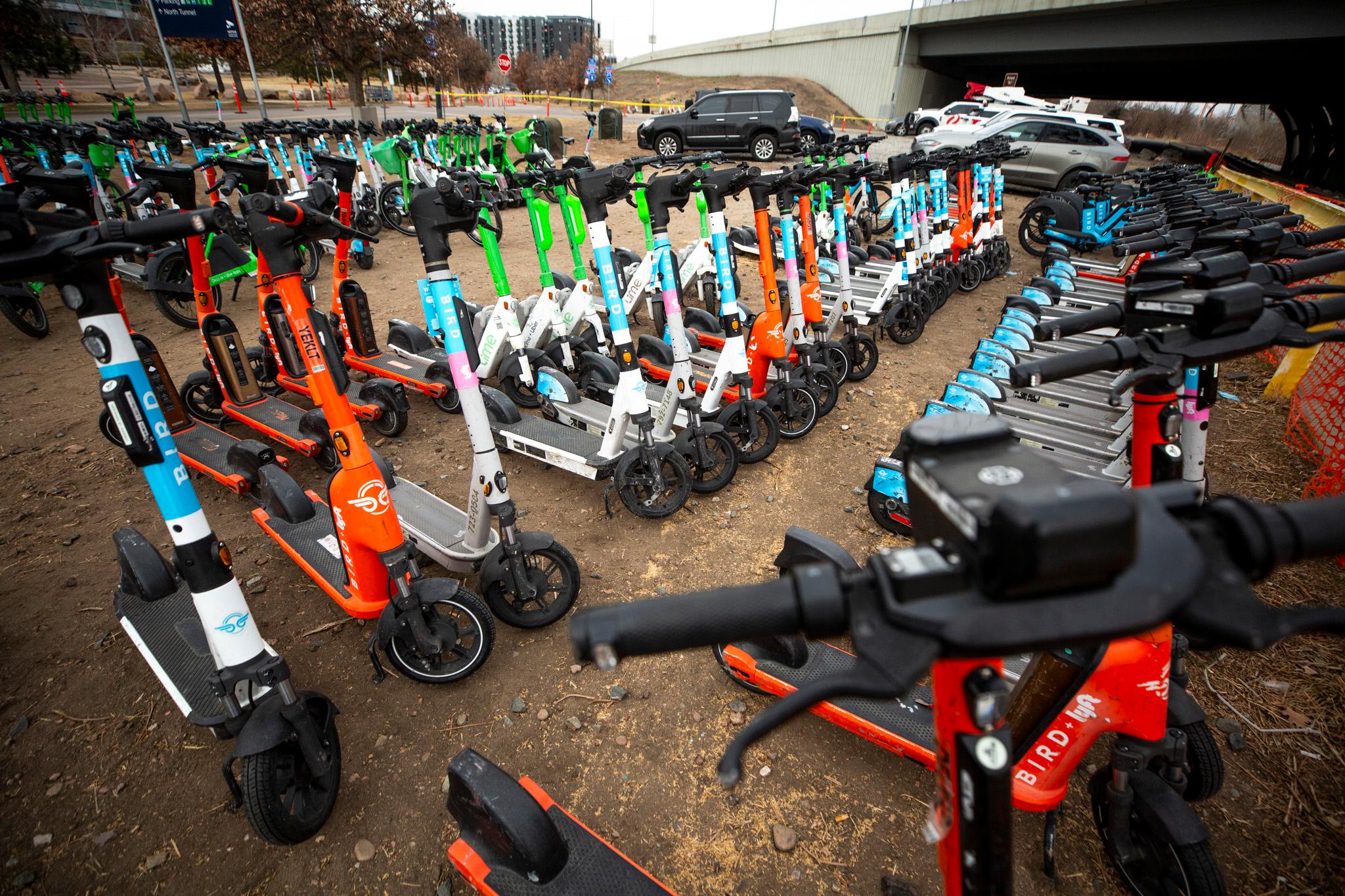
The change has attracted lots of attention: The companies Lime and Bird have offered scooters and bikes for rent around Denver for years.
But the city has moved in recent months to end their contracts and instead allow a smaller company, Veo Micromobility, to become the sole operator of shared micromobility services in Denver.
The vote was delayed twice because committee members said they hadn’t had time to review the contract. Now, it’s finally headed to the Denver City Council in the coming weeks, with hopes for Veo to deploy by May 1.
So, what actually changes for riders? And are we in for another round of scooter chaos?
What would Veo offer in Denver?
Veo would be allowed to operate up to 9,000 vehicles in Denver, slightly more than the number currently on the streets. Veo plans to offer 70% seated vehicles and 30% standing scooters.
There would be five types of vehicles in Denver: a standing scooter, a seated scooter, a two-seater, a bike with a cargo space and a tricycle.
Veo could offer rides at 10% to 35% cheaper rates than the current providers, city staff said.
- The current vendors charge $1 to unlock vehicles and 44 cents per minute of riding
- For Denver residents, Veo would charge $1 to unlock and 25 cents per minute
- Out-of-towners would pay $1 to unlock and 39 cents per minute
Alex Keating, Veo’s head of policy and partnership, said the benefits of operating under one vendor are pricing, access and variety of vehicles. But the company’s critics have asked whether a smaller company is ready to take on such a large operation by itself. The city has the option to bring in another vendor if needed, according to the contract.

Veo would pay the city $245 annually per vehicle it operates — a maximum of $2.2 million if it deploys all the vehicles it is allowed, according to a spokesperson from the Department of Transportation and Infrastructure.
“Over the next two weeks, hiring, training, and community outreach efforts will continue, including Veo Access sign-ups, to help ensure the program is ready for riders on day one,” wrote Paige Miller, a spokesperson for Veo, in an email.
There could be a roughly two-week transition when all three companies will share the streets. Veo will expand its fleet as Lime and Bird ramp down. The other vendors’ contracts expire May 15.
What happens to free rides?
One of the most controversial issues is an access program for low-income riders. Lime allows qualifying riders to take three 30-minute rides for free daily.
There are currently 30,000 people signed up for the access program, according to the city’s Department of Transportation and Infrastructure, and an average of 8,000 active users per month.
Veo has promised to continue the program, and offer an unlimited number of rides up to 60 minutes. Veo is offering early enrollment for residents to transfer from Lime. Enrollment would still be available after the switchover, too.
Still, some riders — along with council members and representatives for Lime — said users could fall through the cracks and lose access.
Previously, Councilmember Sarah Parady said a transition period could smooth out issues.
But Lime officials argued the transition period should be much longer than two weeks.
“We’re asking for a transition contract for at least 12-18 months to ensure a smooth, easy transition for the entire city but especially for Lime Access riders, many of whom will absolutely fall through the cracks for weeks or months if this abrupt shift goes through as planned,” Zach Williams, Lime’s regional head of government relations, said in a statement in March.
“Building a new equity program of this size and scale is not going to happen just telling Denver’s most vulnerable riders to download a new app,” he continued.

Keating said Lime and Bird would need to help with the transition. Earlier, he told Denverite that the competitors should come to terms with the change.
“What Denver or the Department of Transportation infrastructure did was a fair and well-structured procurement and those two vendors lost,” he said in an interview with Denverite. “So eventually they'll have to come to grips with that. It's not possible to extend permits.”
After the Wednesday meeting, Lime said it would work with the city on the transition.
“We have already begun supporting our riders in transitioning to the new Access program and are eager to support DOTI and the new provider to make the transition as smooth as possible,” Williams said in a statement. “We don't want any rider left behind.”
What about the sidewalks?
Denverites have complained for years about scooter users riding and parking on sidewalks.
The city said Veo will follow a recent city law that requires companies to install sidewalk sensors on the vehicles. Veo said controlling sidewalk riding is a priority, and it would ban repeat offenders.
The committee vote was first scheduled for over a month ago, on March 18. It was pushed to April 1 and delayed again to April 15. The contract will now be voted on by the entire council.
Only two council meetings remain between now and May 1, when Veo hopes to launch in Denver.
Editor’s note: Veo Micromobility is a financial supporter of CPR News, the parent organization of Denverite. Financial supporters have no editorial influence.